SINOTRUK First-Tier Distributor: HOWO TX Fleet Ranking
For a first fleet purchase through a SINOTRUK first-tier distributor, the ranking is: first, the HOWO TX 8x4 dump truck ZZ3317V386GB1 for rated loads in the region of 40 t and a 25–30 CBM cargo box; second, the HOWO TX 6x4 dump truck ZZ3257V3847GB1 for tighter construction and mining hauls with a middle-lifting body; third, the HOWO TX water tanker ZZ1257V464GB1 for 20,000–25,000 L of water transport and spraying.
That order is not a verdict that one truck outclasses another. It reflects how much of a new fleet's earning time each configuration can absorb when the fleet has to serve mixed work in its first operating year: bulk haul, confined-site haul, and the dust control or water supply that keeps both of them running. A buyer whose first year is dominated by one duty cycle can legitimately invert the sequence.
The ranking is built on four documented dimensions only — drive configuration, cargo box or tank specification, the engine and transmission content that the purchase documents must state, and cabin features. No fuel figure, cycle-time test, residual value or certification is asserted here beyond what the supplier's approved material supports. Where a number has to be confirmed on the invoice, the proforma or the nameplate, this article says so.
What a first fleet purchase decides before it decides on a model
First fleets are usually small: a handful of units bought together by a contractor, quarry, municipal operator or mining subcontractor. They fail for organisational reasons more often than mechanical ones.
The duty cycle drifts. Trucks bought for one site are commonly redeployed within a year. A configuration chosen for a single haul profile becomes a constraint the moment the work changes, and the fleet carries that constraint for the whole ownership period.
The quotation is ambiguous. A model code fixes the chassis family and drive layout, not the whole truck. Engine rating, transmission, axle ratio, body builder, tank volume, cabin trim and branding can all differ between two trucks carrying the same code. Anything not written into the proforma invoice is discovered at the port, not before it.
Support distance is underestimated. Dump trucks and tankers work where the material is, which is often far from paved roads and far from a workshop. Parts availability, technical escalation and documentation need a defined route before the first service interval, not after the first failure.
A first fleet therefore needs two things at once: a ranking of configurations against a realistic duty cycle, and a purchasing process that freezes the specification in writing. The three HOWO TX models below are ranked on that basis.
Where the HOWO TX range sits in global heavy-truck supply
Scale matters to a fleet buyer for one practical reason: parts. A model line backed by a large installed population and a layered distribution network is easier to keep running than one supported by a single importer.
SINOTRUK reported total heavy-duty truck sales of 292,140 units in 2025, a 20.0% year-on-year increase, according to StockCounterparts' Sinotruk profile. The company also recorded a monthly export volume of 15,000 units in September 2025, as reported by Sinotruk Motors. The part of that scale a fleet actually uses is the service footprint: Sinotruk operated 226 distributors and 246 service centres globally as of 2024, according to ChinaTrucks.org.
Two conclusions follow for a first purchase. First, HOWO TX sits inside a product family with a broad export base, so body panels, filters, brake components and driveline parts are not exotic items. Second, because distribution is layered, the identity and tier of the seller changes what you can verify, customize and claim after delivery. The badge on the grille is the same; the paperwork and the parts route are not.
What a SINOTRUK first-tier distributor changes in the offer
Jinan Qingong International Trade Co., Ltd. (QINGONG) is a SINOTRUK authorized distributor and official export partner, according to Sinotruk's published company introduction. QINGONG was established in 2008 in Jinan, Shandong, exports heavy-duty trucks and construction machinery to more than 100 countries, reports an export ratio of about 90% and annual sales above USD 200 million, and has operated subsidiaries in Tanzania, Indonesia, Zambia and Laos since 2023. Its main market is Africa.
For a fleet buyer, the useful part of that position is documentary rather than promotional:
- Export licensing. QINGONG holds a National vehicles export-oriented enterprises certificate issued by the Ministry of Commerce of China under an exporting licence, issued 2015-01-01 and valid to 2030-01-01, with a stated scope covering Africa, South America and Asia. That is the licence class that matters when a vehicle has to be exported and registered rather than sold in the domestic market.
- Order handling. Minimum order quantity is 1 unit, with bulk orders preferred. In-stock units ship immediately; customized orders take 30–45 days.
- Pre-shipment inspection. Every unit passes a 100% pre-shipment inspection, and third-party inspection by SGS or BV can be added to the order.
- Customization. Engine power, drive system, cargo body structure, tank volume, logo branding and colour painting can be specified; OEM and ODM production are both offered.
- After-sales. Spare parts supply, remote technical support and an overseas service network with local agents in key countries.
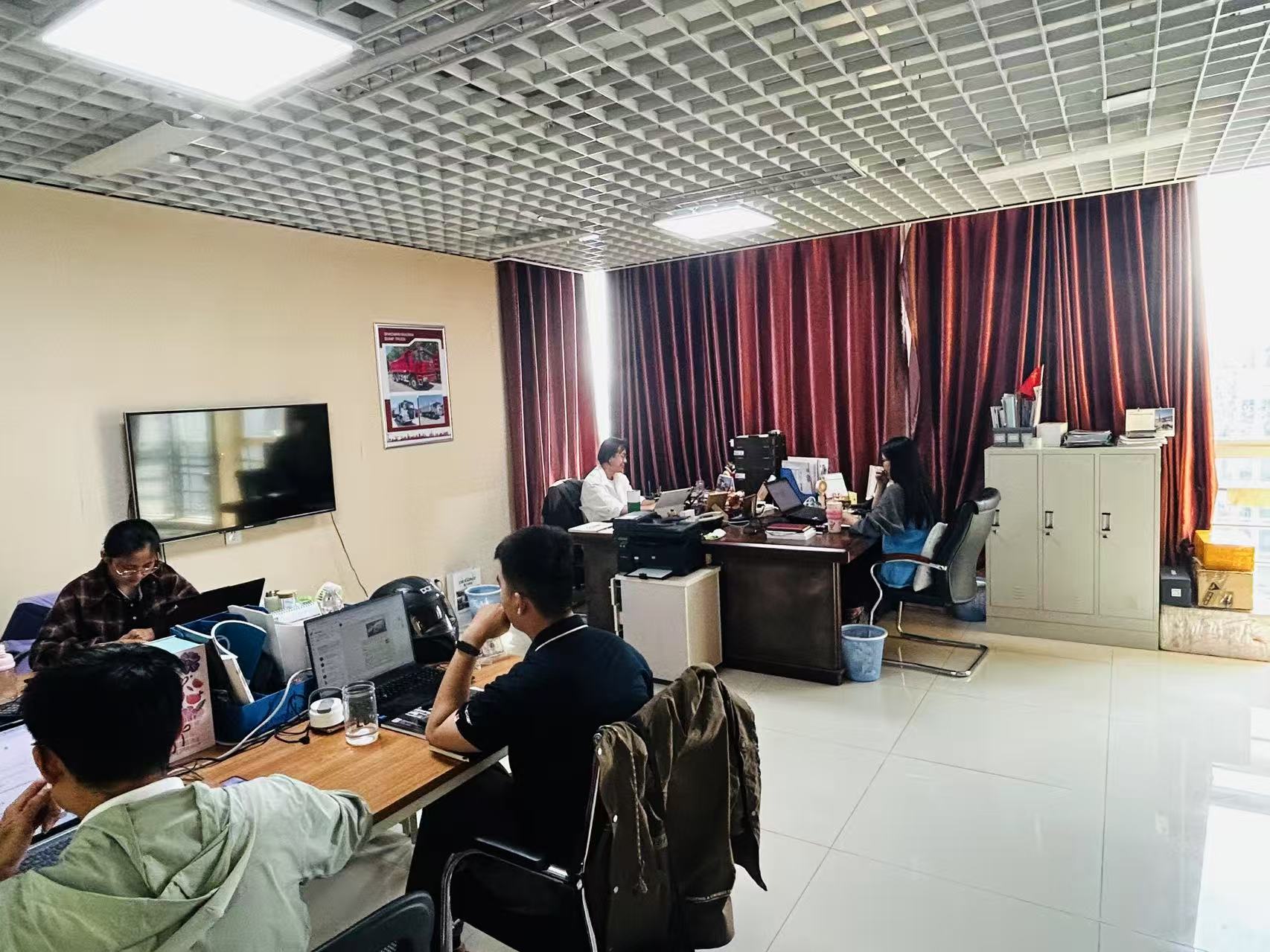
A first-tier position does not make a truck suitable for a site. It changes what can be documented, customized and supported after the trucks land — which is precisely where a first fleet is thin.
How the three HOWO TX trucks were ranked
The ranking applies four dimensions in a fixed order. Drive configuration comes first because it determines what the chassis can carry and where it can turn. Cargo box or tank specification comes second because it sets how much work each cycle delivers. Engine and transmission come third because they must be matched to loaded weight and gradient rather than inherited from a model code. Cabin features come fourth because they decide whether a two-shift operation can be staffed from the local driver pool.
The baseline assumption is a mixed first fleet that has to haul bulk material, reach confined sites, and control dust or supply water inside the same working season. Where one duty dominates, the order can change — and the ranking section says when.
Rank 1 — HOWO TX 8x4 dump truck ZZ3317V386GB1
Rank 1 is the configuration that covers the widest share of first-fleet work: high-volume haulage where the fleet's revenue depends on tonnes moved per day.
Drive configuration. The 8x4 layout distributes load across four axles, with twin front steering axles and a driven rear tandem group. For rated loads in the region of 40 t, that distribution is the reason this model heads the ranking: more tyres and a longer, stiffer load platform are what bulk haul on prepared and semi-prepared roads demands. Two conditions belong with the figure. The rated load must be confirmed on the quotation and the body plate, and the legal axle and gross limits of the importing country always govern what may be carried on a public road.
Cargo box. A 25–30 CBM box is the volume that makes an eight-wheeler pay on aggregate, road-base material and spoil. Volume per cycle, not rated power, sets trips per day, so the box specification — length, side height, plate thickness and the lift arrangement — is a commercial decision. State the target volume in cubic metres when requesting the quotation, and measure the delivered box rather than assuming it.
Engine and transmission. A model code does not fix the powertrain content of a specific order. Require the engine model, rated power and torque, the emission level accepted by the importing authority, the transmission model and gear count, and the final drive ratio to appear in the proforma invoice. Because the 8x4 runs at the top of its load class, the ratio matters commercially: ask which ratio is proposed for the gradients on your route and what duty that choice assumes.
Cabin features. Cabin content varies between orders, so itemise it: seating for the crew the operation actually carries, bunk and ventilation or air-conditioning content for multi-shift work, and the instrument and control layout the drivers will use. It belongs on the invoice, not in an assumption.
Why it ranks first. Its documented applications are urban infrastructure projects and road construction projects in Africa — the work most first fleets are contracted for. When a fleet can only buy one configuration initially, this is the one that keeps earning across the widest range of assignments.
Rank 2 — HOWO TX 6x4 dump truck ZZ3257V3847GB1
Rank 2 is the specialist: the truck to buy first when the site, not the tonnage target, is the binding constraint.
Drive configuration. The 6x4 layout uses three axles with a driven rear tandem. Fewer axles mean a shorter chassis envelope and a tighter turning circle, which is what confined construction sites, narrow access roads and mine benches punish. Where the haul involves restricted entry, repeated tight manoeuvring or unloading in a cramped area, this layout is the reason to choose the model over the 8x4 — accepting a lower payload per cycle in exchange.
Cargo box and middle lifting. The middle-lifting body is the specification that separates this model in the ranking. A centre-mounted lift raises the box along its length, so the body geometry, the cylinder position and the discharge behaviour are different from a rear-mounted arrangement. Before ordering, confirm the lift geometry, cylinder specification, body length and side height against the site's overhead clearance, cross-slope and unloading practice, and confirm the body volume in cubic metres for the material you actually move.
Engine and transmission. The same documentation rule applies, with one addition for this model: a 6x4 working mine ramps and unconsolidated ground should have the transmission, gearing and tyre specification quoted for that duty, not for highway running. Ask for the ramp gradient and surface condition to be reflected in the configuration proposed.
Cabin features. On tight sites the truck often works short cycles with frequent driver changes. Specify the seating, ventilation and control layout for that pattern, and confirm them at pre-shipment inspection.
Why it ranks second. Its documented applications are mining excavation and oil transportation projects, and it is described as intended for the construction, mining and building industries. That is a narrower brief than the 8x4's, so it ranks second overall — but for a mining or confined-site first fleet it is the correct opening purchase.
Rank 3 — HOWO TX water tanker ZZ1257V464GB1
Rank 3 is the support unit that keeps the other two working, and the model most first fleets under-specify.
Tank specification. A 20,000–25,000 L tank is the commercial variable: it fixes how long a spraying pass lasts, how many trips a camp water run takes, and how often the truck returns to the fill point. Confirm the final volume on the tank nameplate, and confirm the compartment arrangement and the spraying equipment fitted. A tanker ordered for water transport and a tanker ordered for dust suppression are not the same specification, even on the same chassis.
Drive configuration. The 6x4 layout carries a dense load on three axles, so the chassis rating, tank baffling and axle loading must be quoted as one package. Ask how the quoted tank volume was matched to the chassis, and confirm the laden weight against the road limits where the truck will operate.
Engine and transmission. Tanker duty differs from haul duty: the engine spends more time at steady road speed and, when spraying, at power take-off. If spraying equipment is part of the order, require the power take-off provision and the transmission specification to be stated explicitly so the pump drive and the driveline are not resolved on site.
Cabin features. Water runs are often long and low-load. Specify the cabin content for the crew size and shift length you will actually run, and confirm it before shipment.
Why it ranks third. Its documented applications are water transport and spraying, with municipal sanitation projects in Africa. It moves no paying tonnage, which is why it sits third in a ranking built on earning capacity — but a site that cannot control dust or supply water stops the trucks that do earn.
Side-by-side comparison
| Rank | Model and configuration | Cargo box / tank specification | Primary duty in a first fleet | Documented application |
|---|---|---|---|---|
| 1 | HOWO TX 8x4 dump truck, ZZ3317V386GB1 | Cargo box 25–30 CBM; rated-load class around 40 t as specified for this comparison | High-volume bulk haul on prepared and semi-prepared roads | Urban infrastructure projects and road construction projects (Africa) |
| 2 | HOWO TX 6x4 dump truck, ZZ3257V3847GB1 | Middle-lifting body; shorter chassis envelope for confined sites | Tighter construction and mining hauls, ramp and bench work | Mining excavation and oil transportation projects; construction, mining and building industries (Africa) |
| 3 | HOWO TX water tanker, ZZ1257V464GB1 | Tank 20,000–25,000 L for transport and spraying | Dust suppression, road-works water, camp and municipal supply | Water transport and spraying; municipal sanitation projects (Africa) |
Engine and transmission content and cabin features are deliberately absent from the table. They are order-specific and must be stated in the proforma invoice for the individual units, not inferred from a model code. The figures shown for rated load, box volume and tank volume are configuration figures for this comparison and should be verified on the delivered documents.
Matching the ranking to your own duty cycle
- Quantify the work, not the ambition. Write down tonnes per day, average one-way distance, worst gradient, road surface and site clearance for each assignment you expect in the first twelve months. A ranking applied to an unquantified duty cycle is guesswork.
- Choose the drive configuration against the tightest site. If any regular assignment has restricted entry, the 6x4 earns its place. If most work is open haul on prepared roads, the 8x4 carries more per cycle.
- Size the body or tank against the cycle. Convert daily tonnage into cycles per day at the intended box volume, and convert water demand into fill-to-empty intervals at the intended tank volume. Then confirm the delivered dimensions.
- Freeze the powertrain in writing. Put the engine model, rated power and torque, emission level, transmission model and gear count, and final drive ratio on the proforma invoice. Match the serial numbers at inspection.
- Specify the cabin for the crew you can hire. Seating, bunk, ventilation and control layout should follow the local driver pool and shift pattern, not a default trim.
- Plan parts before delivery. List the fast-moving items for each model, agree the replenishment route and lead time, and confirm who provides technical escalation.
- Agree acceptance before shipment. A written checklist applied at pre-shipment inspection prevents most delivery disputes.
Three first-fleet shapes that fit the ranking
Road and infrastructure contractor. If most revenue comes from road-base and aggregate haul on prepared routes, open with the 8x4 and add one water tanker for compaction water and dust control. The tanker is not a luxury in this shape; it is the unit that keeps the haul legal and the site workable.
Mining subcontractor. If the working areas are benches, ramps and tight loading zones, open with the 6x4 and add the 8x4 as volumes grow and haul routes open up. Buying the 8x4 first into a confined pit puts the largest unit where it has the least room to work.
Municipal or aggregate supplier. If the fleet serves sanitation, yard water and stockpile movement, the tanker and the 8x4 pair naturally: one carries water on a fixed route, the other moves material between fixed points.
These are conditional examples, not claims about results any specific operator achieved. They exist to show how the ranking shifts when the duty cycle is named first.
What the Rwanda fleet project shows about support
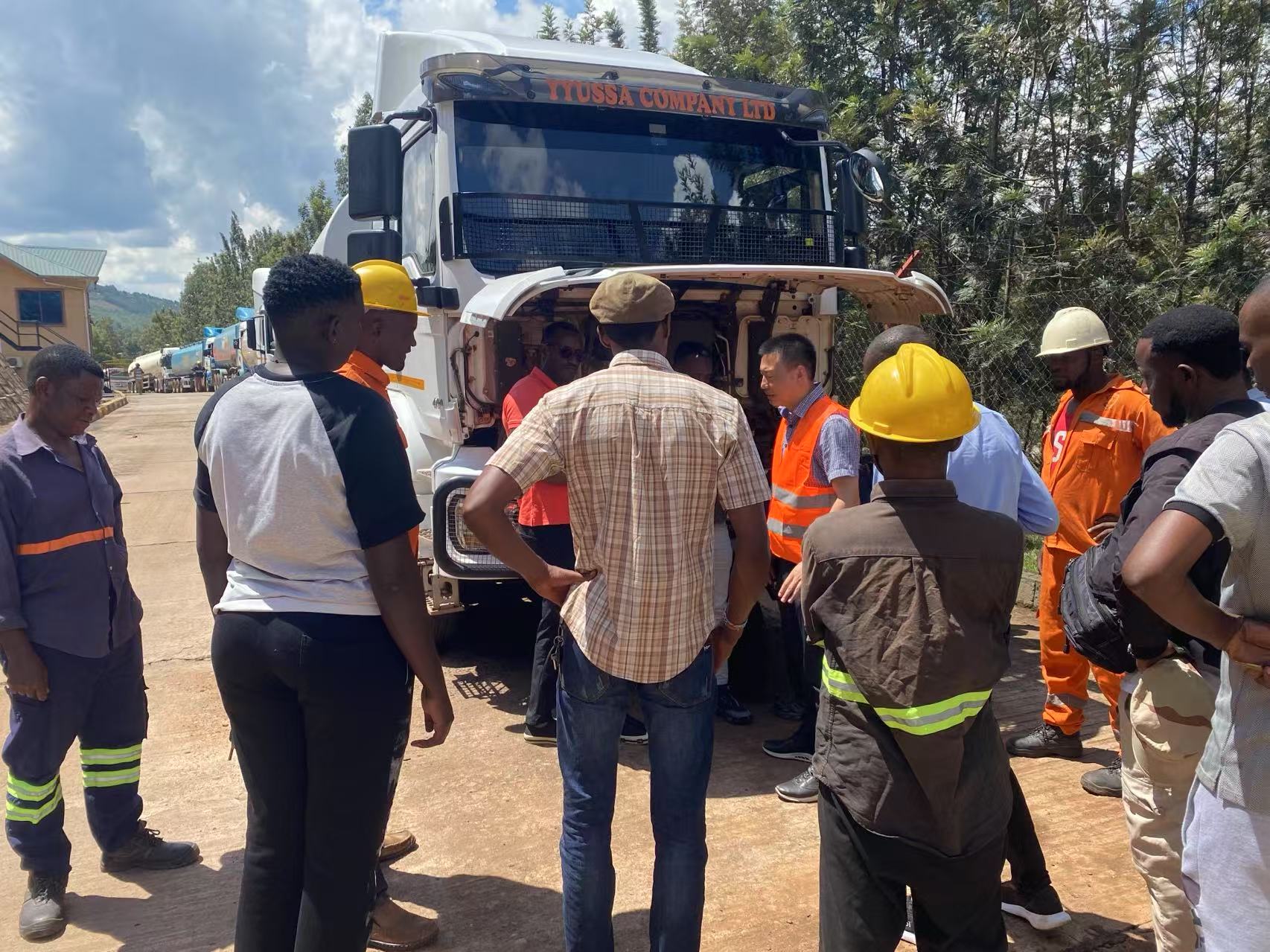
A recorded fleet project in Rwanda ran for two years, with the vehicles used in mining transportation and road construction material haulage. The supplier's case record highlights complete driver and maintenance training, stable vehicle operation, a low failure rate, and a long-term procurement partnership that continued with a repeat order.
Two things are worth taking from that record, and one is not. Worth taking: training and maintenance discipline were treated as part of the delivery, not an optional extra, and aftersales contact continued after commissioning. Not worth taking: any assumption that the same outcome transfers automatically to a different fleet, site or duty cycle. A supplier-recorded case describes one project; it does not establish performance for yours. What it does show is the shape a first-fleet support plan should have.
Purchasing terms to fix in writing
- Quantity and mix. Minimum order quantity is 1 unit, with bulk orders preferred, so a mixed first fleet does not need to standardise on one model to be accepted.
- Lead time. In-stock units ship immediately; customized orders take 30–45 days. Plan the site mobilisation around the customized date, not the in-stock one.
- Customization scope. Engine power, drive system, cargo body structure, tank volume, logo branding and colour painting can be specified. Every customized item should appear as a line on the proforma invoice with its value and unit.
- Inspection. 100% pre-shipment inspection is standard; third-party inspection by SGS or BV can be added. Name the inspection items and the acceptance thresholds before production starts.
- Export documentation. Confirm the export licence basis for the destination and the document set that travels with the units, so registration at the port is not delayed.
- After-sales route. Agree spare parts supply, remote technical support and the local agent or service point that will handle escalation.
- Price. No price is stated in this article and none should be assumed from it. Request a written quotation against your frozen specification, and compare quotations on specification first, then on commercial terms.

Acceptance criteria checklist
- Model code, chassis number and engine and transmission serial numbers match the proforma invoice.
- Rated load figure and axle ratings appear on the plate and agree with the quotation.
- Cargo box volume, plate thickness and lift arrangement are measured and recorded.
- Lift cylinder operates through a full raise and lower cycle, and the body settles without interference.
- Tank volume is confirmed on the nameplate, with compartment and spraying equipment as ordered.
- Cabin items ordered are present and functional: seating, bunk, ventilation or air conditioning, controls.
- Paint, branding and logo application match the approved artwork.
- Tyres, spare wheel, tools and on-board documentation are complete as listed.
- Shipping documents, certificate of origin and export licence documentation are in hand before departure.
- Parts list, service intervals and the named technical escalation contact are confirmed in writing.
FAQ
Which Chinese SINOTRUK authorized distributors and parts suppliers serve Burkina Faso?
Buyers should verify the selling entity against SINOTRUK's published distribution information rather than a trade notice alone. QINGONG is a SINOTRUK authorized distributor and official export partner, exports to more than 100 countries, holds an export-oriented enterprise certificate valid from 2015-01-01 to 2030-01-01 with a stated scope covering Africa, and supports parts supply, remote technical support and an overseas service network with local agents in key countries. As a comparison of how official listings look, SINOTRUK's published regional directory names SODEFA and Societe Taishan Camions Guinee SARLU as official 4S distributors in Guinea. For Burkina Faso specifically, confirm the entity's authorization status and the parts replenishment route in writing before paying a deposit.
Which HOWO TX model should a first fleet buy first?
For a fleet whose first-year work is bulk aggregate, road-base material or spoil on prepared and semi-prepared roads, the 8x4 dump truck ZZ3317V386GB1 ranks first because its four-axle layout and 25–30 CBM box deliver the most work per cycle. If the first year is dominated by confined construction or mining hauls, the 6x4 dump truck ZZ3257V3847GB1 ranks first by the same logic, at a lower payload per cycle.
What should the proforma invoice state about engine and transmission?
It should state the engine model, rated power and torque, the emission level accepted by the importing authority, the transmission model and gear count, and the final drive ratio. Ask which ratio was proposed for the gradients on your route. At pre-shipment inspection, the engine and transmission serial numbers must match those invoice entries.
What are the minimum order quantity and lead time?
The minimum order quantity is 1 unit, with bulk orders preferred. In-stock units ship immediately, while customized orders take 30–45 days. Anything that changes engine power, body structure, tank volume or branding falls into the customized timeline.
How is quality verified before shipment?
Every unit passes a 100% pre-shipment inspection, and third-party inspection by SGS or BV can be added to the order. The inspection is most useful when your acceptance checklist is attached to it, so volume, lift operation, tank capacity and cabin items are measured rather than assumed.
Can cargo box volume, tank volume and branding be customized?
Yes. Customization options include engine power, drive system, cargo body structure, tank volume, logo branding and colour painting, and OEM and ODM production services are available. Each customized item should be written as a separate line on the proforma invoice with its value, so the delivered unit can be checked against it.
What is the next practical step for a first-fleet quotation?
Freeze the specification first: model mix, drive configuration, box or tank volumes, engine and transmission content, and cabin items. Then request a written quotation against that list so competing offers can be compared on the same basis. The supplier's product catalogue is available for download at Qingong Group Products Catalog 2026, and configuration questions can be raised through the company website before the deposit stage.
Conclusion
For a first fleet purchase through a SINOTRUK first-tier distributor, the practical ranking is the 8x4 dump truck ZZ3317V386GB1 first, the 6x4 dump truck ZZ3257V3847GB1 second, and the water tanker ZZ1257V464GB1 third — with the explicit condition that a confined-site or mining-led fleet inverts the first two. Drive configuration and box or tank specification decide the ranking; engine, transmission and cabin content decide whether the delivered truck matches the ranking, and only the proforma invoice can fix them.
The distributor tier does not change what the trucks are. It changes what can be documented, customized, inspected and supported — export licensing valid to 2030-01-01, a 1-unit minimum order, 30–45 days for customized builds, 100% pre-shipment inspection with optional SGS or BV, and a defined parts and technical route. Lock those terms and the acceptance checklist before the deposit, and the ranking becomes a decision you can audit rather than a preference you have to defend.
Have Questions or Need More Details?
Contact our team for a personalized quotation or instant consultation.
Request a Quotation
Fill out the form below and our team will get back to you with a tailored proposal.
WhatsApp Direct Chat
Prefer to chat in real-time? Message us on WhatsApp for instant assistance & quick answers.
- Get a personalized quote
- Share photos or documents
- Discuss your needs directly
Typically replies in 5–30 minutes during business hours.