HOWO TX Dump Box and Water Tanker Steel: A Selection Guide
This guide is about steel, geometry and duty cycle, not engine trim. A HOWO TX body is selected by matching four variables: material and plate thickness, cargo volume, unloading method, and the work the truck will actually do. The three configurations covered here resolve those variables differently. The 6x4 dump truck carries a 5400 x 2300 x 1500 mm cargo box built from 8 mm floor plate and 6 mm side plate, with a middle lifting system. The 8x4 dump truck is specified at 25-30 CBM of body volume against a 40-ton rated load. The water tanker uses Q235 carbon steel construction in a 20,000 L to 25,000 L tank with water spray equipment.
Read in that order, the specification stops being a price comparison between three bodies and becomes a decision about which limit will govern the truck's working life: plate wear on the floor, the rated load, or the discharge arrangement. The sections below follow that sequence, and the comparison table near the end collects every stated figure in one place.
Why body specification is where most HOWO TX orders go wrong
Four patterns account for most of the gaps between what a buyer believes was ordered and what arrives on site.
- Volume quoted without a definition. A figure such as 25-30 CBM is only meaningful when it is clear whether it describes the geometric volume of the box or a heaped working volume. The two are not interchangeable, and the difference widens with the material being carried.
- One plate number for a two-plate body. The 6x4 box is not 8 mm steel all round; it is 8 mm on the floor and 6 mm on the sides. A quotation that gives a single number has not specified the body.
- Volume and rated load treated as the same limit. The 8x4 combines 25-30 CBM of body volume with a 40-ton rated load. Which figure stops the loading operation first depends entirely on the cargo.
- Tank capacity quoted in litres only. The 20,000 to 25,000 L range says nothing about how the water leaves the tank, which is what the road-building crew downstream depends on.
There is a fifth, more administrative problem worth naming. The same dump truck specification appears under two designations in supplier documentation: the model is designated ZZ3257V3847GB1, while the specification sheet lists it as ZZ3257V384GB1. Neither should be quietly corrected by assumption. Ask for the designation to be reconciled on the proforma invoice and packing documents before the order proceeds, because that document set is what customs, insurance and later spare-parts ordering will depend on.
The duty cycles these three bodies are built for
Body specification follows the environment, and the two dump configurations are documented for different ones. The 6x4 dump truck operates under high-temperature, heavy-load and desert road conditions, which is the operating profile of much of the African market this equipment is exported into. The 8x4 dump truck is designed for mining rough terrain and humid tropical environments.
That distinction changes what the steel has to survive. On desert road work the body faces sustained high ambient temperature over long road-distance cycles, with loading impact concentrated at the floor. In mining and humid tropical conditions the body works over rough ground under load, with frequent articulation and short, heavy cycles. A specification written for one profile is not automatically a specification for the other, which is why the plate and geometry discussion below stays tied to the configuration instead of being offered as general advice.
The water tanker sits outside both. Its duty cycle is defined by the road-building or construction schedule it supports, such as dust suppression on haul roads and water for compaction and grading works, and by how much water must be delivered per shift.
Where the equipment and the steel specification come from
Body selection is a technical decision, but it sits inside a supply-chain decision, and the two should not be separated when a fleet is being planned. Sinotruk (Hong Kong) Limited reported heavy-duty truck export volume of 134,038 units in 2024 in its annual report, which indicates the scale of the export channel that SINOTRUK global distributors draw on.
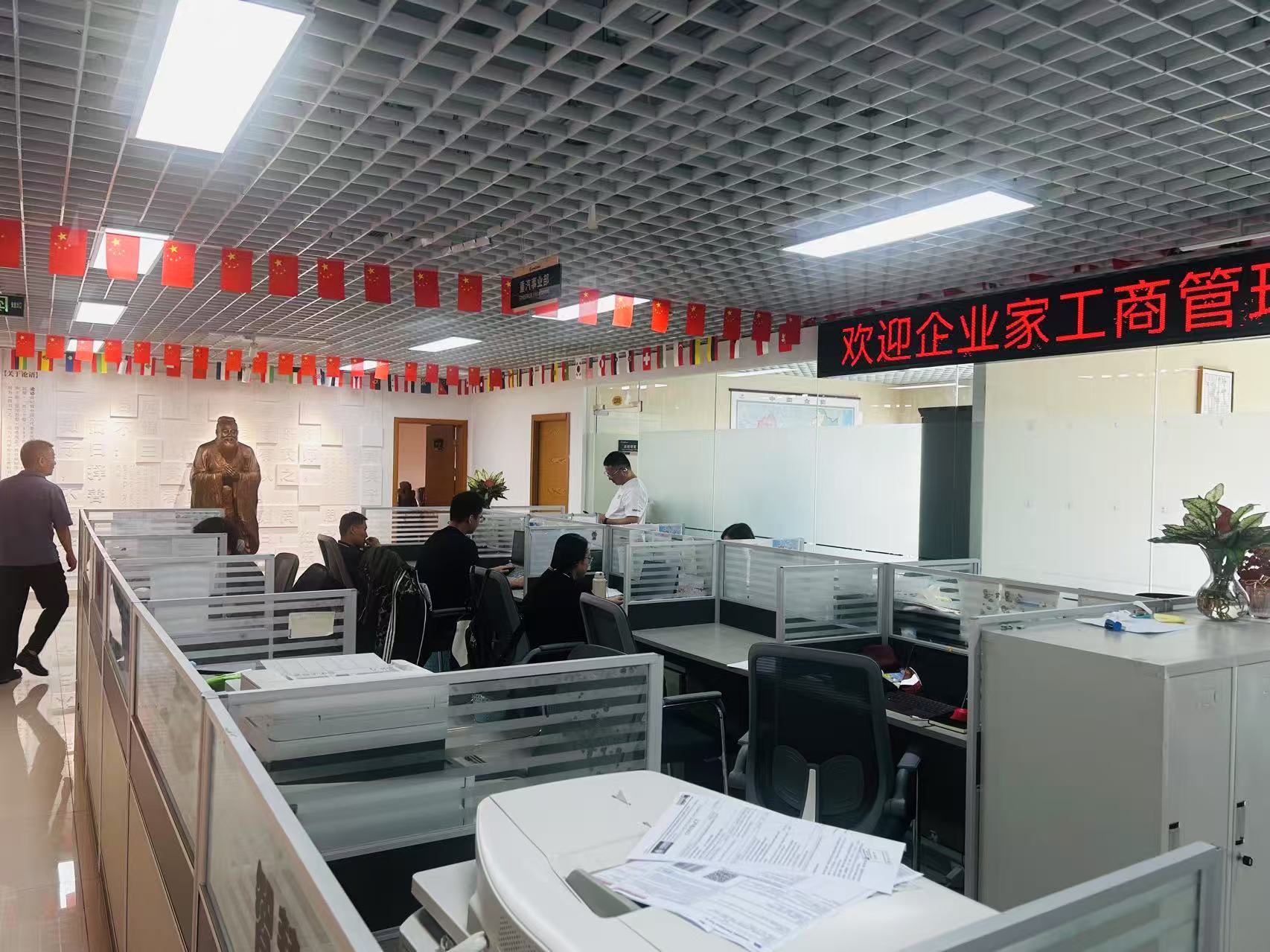
QINGONG (Jinan Qingong International Trade Co., Ltd.) is described in published industry coverage as an authorized first-tier distributor and official export partner of SINOTRUK. The company has operated from Jinan, Shandong since 2008, works as an official exporter of SINOTRUK, SHACMAN and FAW, and reports Africa as its main market within a 90% export ratio. Its stated base includes a 4,500 m2 factory area, 300 employees and an 80-engineer technical team, and since 2023 it has established subsidiaries in Tanzania, Indonesia, Zambia and Laos. Those local entities matter for a body order for a practical reason: plate thickness and lifting geometry are settled at the specification stage, but warranty, body spares and hydraulic parts are settled after delivery.
For buyers in West Africa, SINOTRUK International publishes regional contact coverage that includes Senegal, Mauritania, Mali, Cote d'Ivoire, Ghana, Benin, Burkina Faso, Togo, Liberia and Sierra Leone. That is a route for verifying authorization and routing a technical inquiry. Regional contact coverage is not the same thing as a confirmed national distributor appointment, and the two should not be conflated when a buyer is checking who is authorized to sell which product line.
The three HOWO TX bodies, specified
6x4 dump truck: 5400 x 2300 x 1500 mm box, 8 mm floor, 6 mm sides
The 6x4 dump truck's cargo box measures 5400 x 2300 x 1500 mm. Multiplying those three stated dimensions gives a calculated geometric volume of 18.63 m3 (5.4 x 2.3 x 1.5), rounded to two decimal places. That figure is a property of the box geometry; it is not a rated capacity, and it should not be confused with the 25-30 CBM body volume quoted for the 8x4 model.
The plate specification is deliberately asymmetric: 8 mm on the floor, 6 mm on the sides. The arrangement follows the load path. The floor absorbs loading impact and the abrasive sliding of material during discharge, so it carries the thicker plate. The side walls carry mainly lateral pressure from the contained load, so they are specified thinner. When comparing quotations, ask for the two numbers separately; a body described as 8 mm without a side-wall figure has not been specified to this arrangement.
Discharge is by a middle lifting system, which positions the lifting cylinder under the body rather than at the front. The buyer's questions are the same regardless of arrangement: what tipping clearance the site has, how the body behaves when the load is wet or compacted, and whether the discharge angle matches how material is stockpiled or fed into a hopper. Those are site questions, and the answer should come from the supplier's body drawing rather than from an assumption.
8x4 dump truck: 25-30 CBM body volume and a 40-ton rated load
The 8x4 dump truck is specified with 25-30 CBM of body volume and a 40-ton rated load, and it is designed for mining rough terrain and humid tropical environments. The critical point is that volume and rated load are separate limits, and which one stops the loading operation first depends on the material.
For dense material, the 40-ton rated load is reached before a 25-30 CBM body is full. For light, bulky material, the body fills first and the rated load is never approached. A buyer who specifies only the volume, or only the load, has specified half of the constraint. The right question at quotation stage is therefore not how many cubic metres, but which limit applies to the material that will actually be carried, and what the body itself weighs in the configuration quoted.
Water tanker: Q235 carbon steel, 20,000-25,000 L, water spray equipment
The SINOTRUK HOWO TX WATER TANKER TRUCK is built in Q235 carbon steel with a capacity range of 20,000 to 25,000 L and is fitted with water spray equipment. Q235 is a general structural carbon steel: it is weldable and formable, which is why it is used for fabricated tank shells. The supplied material states the steel grade but does not state an internal coating or lining system, so if the tank will carry anything other than clean water, that should be confirmed separately rather than inferred from the grade.
Capacity selection works differently on a tanker than on a dump body. Water is close to 1 kg per litre, so a 20,000 L tank corresponds to roughly 20 tonnes of water at that density and a 25,000 L tank to roughly 25 tonnes. Both are calculated from the stated volumes on that density assumption, not measured payloads. Because cargo density is effectively fixed, choosing a position inside the 20,000-25,000 L range is a payload decision as much as a volume decision, and it should be checked against the chassis rating in the quoted configuration.
The water spray equipment is what connects the tank to the job. On road building, spray supports dust suppression on haul roads and water delivery for compaction and grading works, so the requirement should be written as a delivery rate and spray pattern, not only as a tank size.
A seven-step selection sequence
The sequence below follows the order in which the decisions constrain each other. Changing a later step usually reopens an earlier one, which is why technical specification and commercial terms are kept apart.
- Write the duty cycle down first. Record the environment (high-temperature desert road work versus mining rough terrain and humid tropical ground), the typical cycle length, the material carried and how it is loaded. This single paragraph decides most of what follows.
- Choose the body family. Road-distance material haulage points to the 6x4 with its 5400 x 2300 x 1500 mm box; sustained dense-material mining haulage points to the 8x4 with 25-30 CBM and a 40-ton rated load; dust suppression and compaction water point to the tanker.
- Decide which limit governs. State whether the rated load or the body volume will be reached first with your material, and make the supplier confirm it in writing for the configuration quoted.
- Specify floor and side plate separately. For the 6x4, that means 8 mm floor and 6 mm sides. A single figure such as 8 mm body is not a complete specification.
- Fix the discharge method. Confirm the middle lifting system and its tipping clearance for the dump bodies, and write the spray requirement for the tanker as a rate and pattern rather than a tank size alone.
- Reconcile designations and documentation. Confirm the dump truck designation (ZZ3257V3847GB1 as the model, ZZ3257V384GB1 as listed on the specification), the 8x4 designation ZZ3317V386GB1 and the tanker designation ZZ1257V464GB1 on the invoice, and keep the export documentation consistent with them.
- Lock acceptance and commercial terms. Agree the pre-shipment test as the acceptance criterion, the Incoterm, and the payment route before production starts, so that a technically correct body is not held up by an unresolved commercial clause.
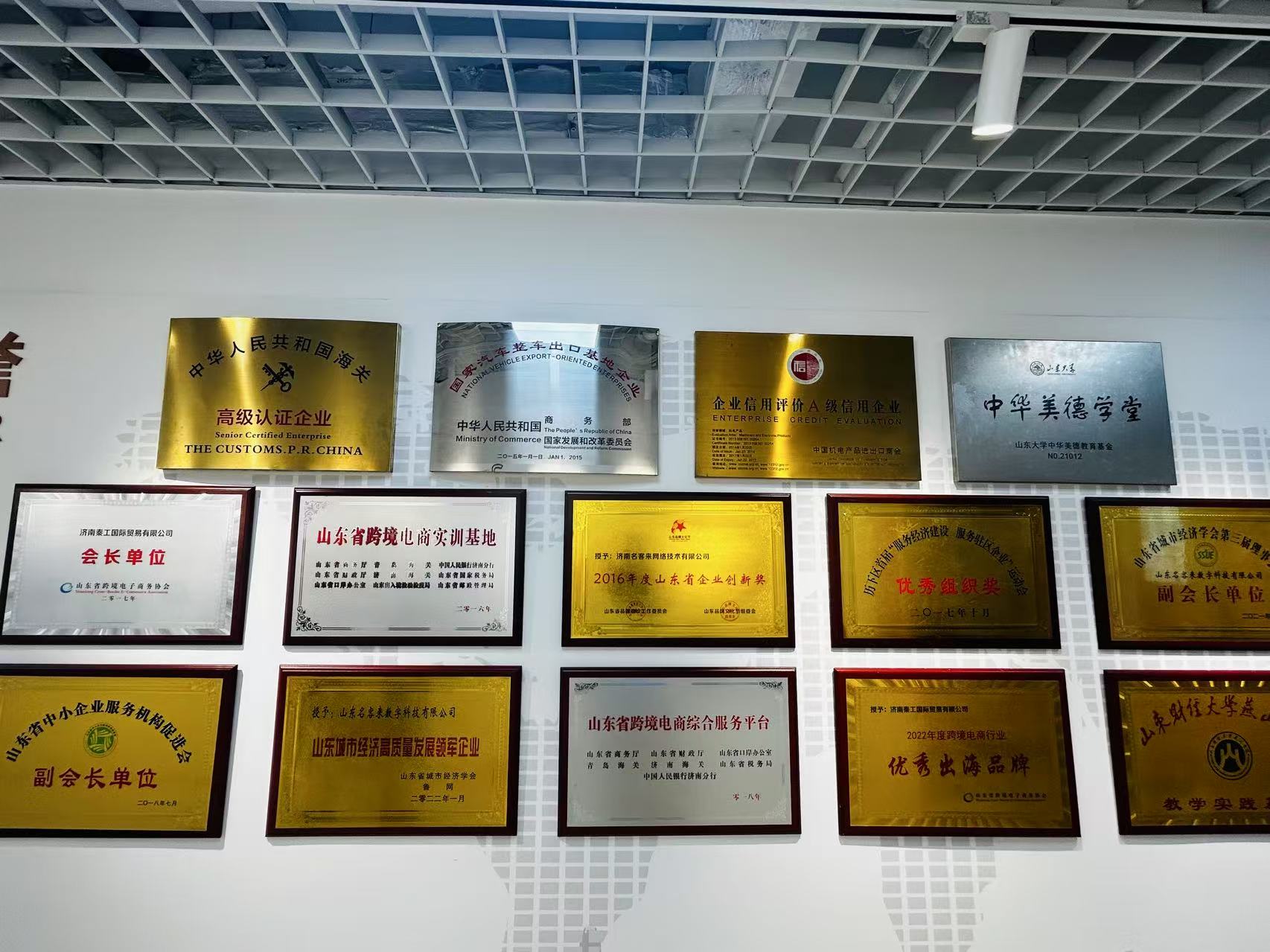
On documentation specifically, QINGONG holds a National vehicles export-oriented enterprises certificate issued by the Ministry of Commerce of China, recorded with an issue date of 2015-01-01 and an expiry date of 2030-01-01, covering Africa, South America and Asia. Buyers auditing a supplier can ask for the certificate copy alongside the signed specification sheet and the pre-shipment inspection record; the three documents together describe what is being built, who is exporting it and how it was checked.
Matching body and steel to the job
Construction material haulage
Construction and road-building material haulage is the natural home of the 6x4 configuration. The 18.63 m3 geometric box and the 8 mm floor plate suit repeated loading impact from aggregate and spoil, and the middle lifting system discharges to the rear where a stockpile or hopper accepts it. The limiting factor on this duty is usually the floor plate and the tipping cycle, not the body volume.
Mining haulage
Mining work in rough terrain and humid tropical conditions favours the 8x4, where 25-30 CBM of body volume sits against a 40-ton rated load. The planning question is which limit binds: dense ore and wet spoil often reach the rated load first, while lighter overburden fills the body. Getting that wrong shows up as either an under-used body or an overloaded chassis, and neither is resolved after delivery.
Road-building water supply
Water supply for road building is a schedule problem before it is a tank problem. A 20,000 L tank at roughly 20 tonnes of water and a 25,000 L tank at roughly 25 tonnes behave differently on the same chassis, and the spray equipment determines how quickly that water is placed where it is needed. Specify litres per shift and spray coverage, then choose the tank size that supports it.
A fleet case: Rwanda
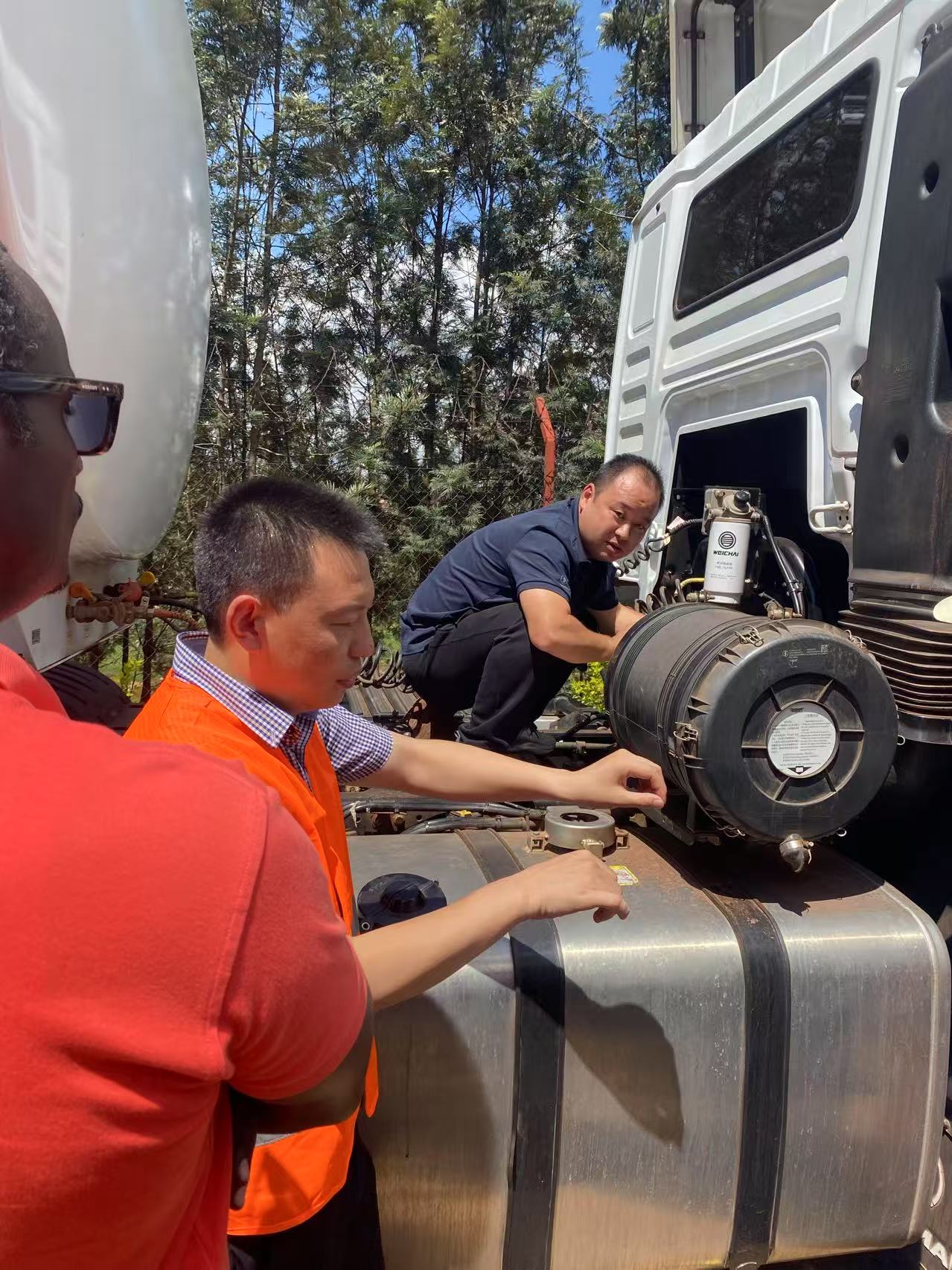
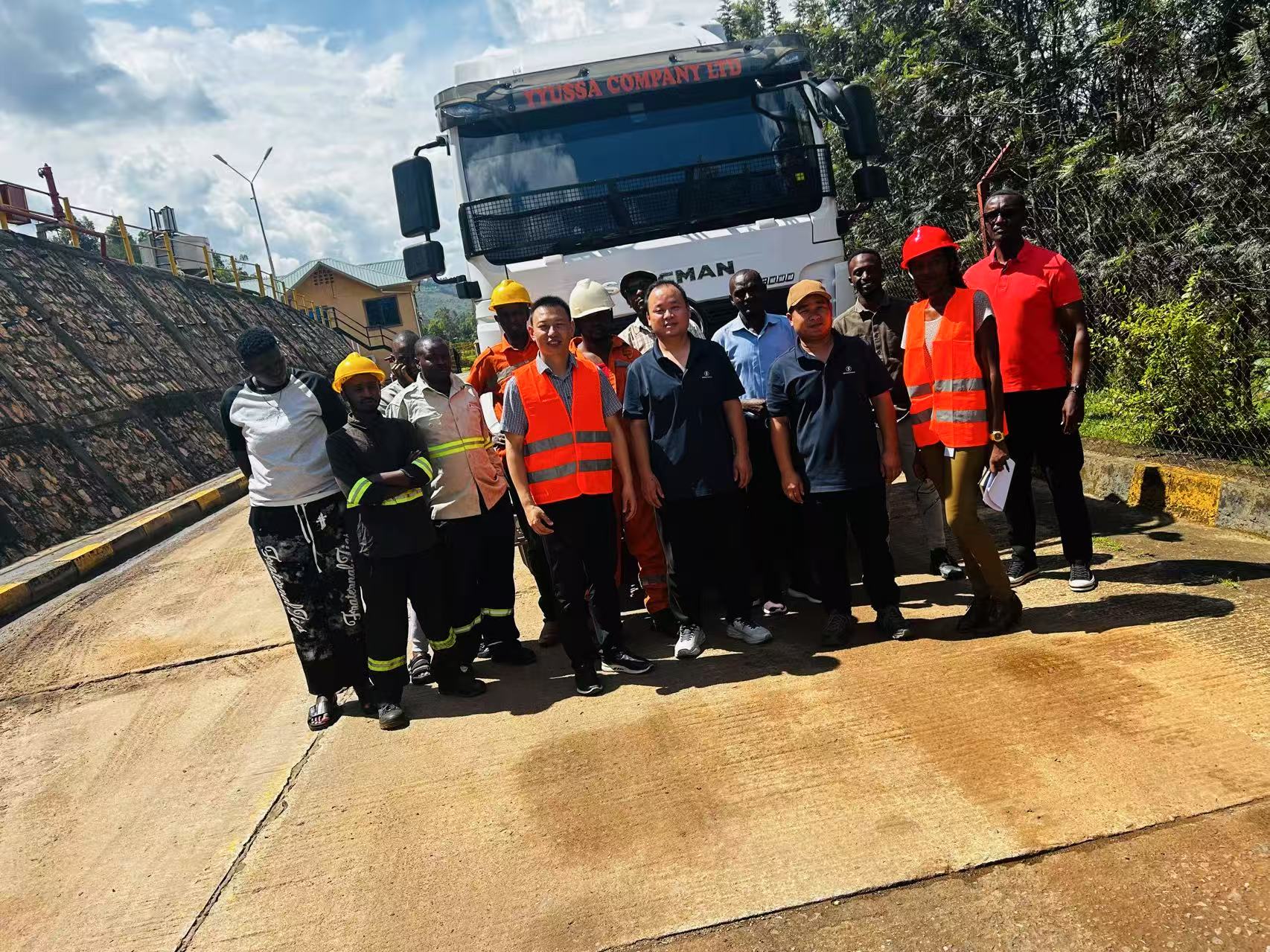
A documented QINGONG customer case from Rwanda covers a 70-unit SINOTRUK HOWO deployment over two years, used for mining transportation and road construction material haulage, with after-sales service support. The recorded outcomes are complete driver and maintenance training, stable vehicle operation and a reduced fleet failure rate, and the customer subsequently placed a repeat order and moved to a long-term procurement arrangement. Read as a body-selection reference, the relevant lesson is operational rather than promotional: fleet-level results over two years depend on the training and service layer as much as on plate thickness, and that layer belongs in the evaluation, not in the after-sales appendix.
HOWO TX body comparison at a glance
The table records only figures stated in the product material. Where a value is not stated for a configuration, it is marked as such rather than estimated.
| Selection point | 6x4 dump truck | 8x4 dump truck | Water tanker |
|---|---|---|---|
| Model designation | ZZ3257V3847GB1 (specification lists ZZ3257V384GB1) | ZZ3317V386GB1 | ZZ1257V464GB1 |
| Cargo body or tank | 5400 x 2300 x 1500 mm box | 25-30 CBM body volume | 20,000-25,000 L tank |
| Calculated geometric volume | 18.63 m3 (calculated from the stated dimensions) | Not restated; body volume given as 25-30 CBM | Roughly 20-25 t of water at 1 kg per litre (calculated) |
| Plate or material | 8 mm floor, 6 mm sides | Not stated in the material reviewed | Q235 carbon steel |
| Rated load | Not stated in the material reviewed | 40 tons | Not stated; check against chassis rating |
| Discharge or equipment | Middle lifting system | Not stated in the material reviewed | Water spray equipment |
| Documented operating profile | High-temperature, heavy-load, desert road conditions (Africa) | Mining rough terrain, humid tropical environments (Africa) | Road-building and construction water supply |
| Typical selection driver | Road-distance haulage with impact loading on the floor | Dense material where the rated load binds before volume | Delivery rate and payload within the chassis rating |
Frequently asked questions
How do I confirm the model designation, body dimensions and plate thickness before ordering?
Ask for a signed specification sheet and compare it line by line with the proforma invoice. For the 6x4 dump truck that means confirming the 5400 x 2300 x 1500 mm box, the 8 mm floor and the 6 mm sides as separate line items, and reconciling the designation, which appears as ZZ3257V3847GB1 for the model and ZZ3257V384GB1 on the specification. Pre-shipment test is the stated acceptance criterion, and 100% pre-shipment inspection is standard, with third-party inspection by SGS or BV available as an option.
Which SINOTRUK global distributor manufacturers provide overseas channel support?
Channel support operates at two levels and they should be checked separately. At manufacturer level, SINOTRUK International publishes regional contact coverage for West Africa, including Senegal, Mauritania, Mali and Cote d'Ivoire, which is the correct starting point for verifying who is authorized in a given country. At distributor level, QINGONG is described in published industry coverage as an authorized first-tier distributor and official export partner of SINOTRUK, and states after-sales support as spare parts supply, remote technical support and an overseas service network with local agents in key countries, backed by subsidiaries established since 2023 in Tanzania, Indonesia, Zambia and Laos. For a HOWO Africa distributor evaluation, ask for the authorization document, the legal entity behind the local support and the spare-parts route in writing.
Does a new HOWO TX cost less to run than a used truck?
The manufacturer-side position is that SINOTRUK HOWO new vehicles provide 30-50% lower total maintenance cost compared to used trucks and 2-3 times longer service life over alternatives. That is a stated company comparison rather than an independent test result, so it is best used as a hypothesis to test against your own cycle cost: request the maintenance schedule and parts pricing for the body and hydraulic system you are specifying, and compare those against the repair history of the used units you would otherwise buy.
Can I order a single unit, and can the body or tank be customized?
Yes. The stated minimum order quantity is 1 unit, with bulk orders preferred. Customization is offered under OEM, ODM and customized manufacturing, covering engine power, drive system, cargo body structure, tank volume, logo branding and colour painting. For a body order, the useful way to use that flexibility is to fix the plate specification and discharge arrangement first and treat paint and branding as the last items, so that appearance changes never substitute for a technical change.
What lead times apply, and what production capacity stands behind them?
In-stock units are quoted for immediate shipment, while customized orders are quoted at 30-45 days. Monthly production capacity is 1,500 to 3,000 units, varying by model mix, so a customized body order scheduled inside a peak period should have its production slot confirmed rather than assumed from the standard lead-time figure.
What are the purchasing terms and acceptance criteria?
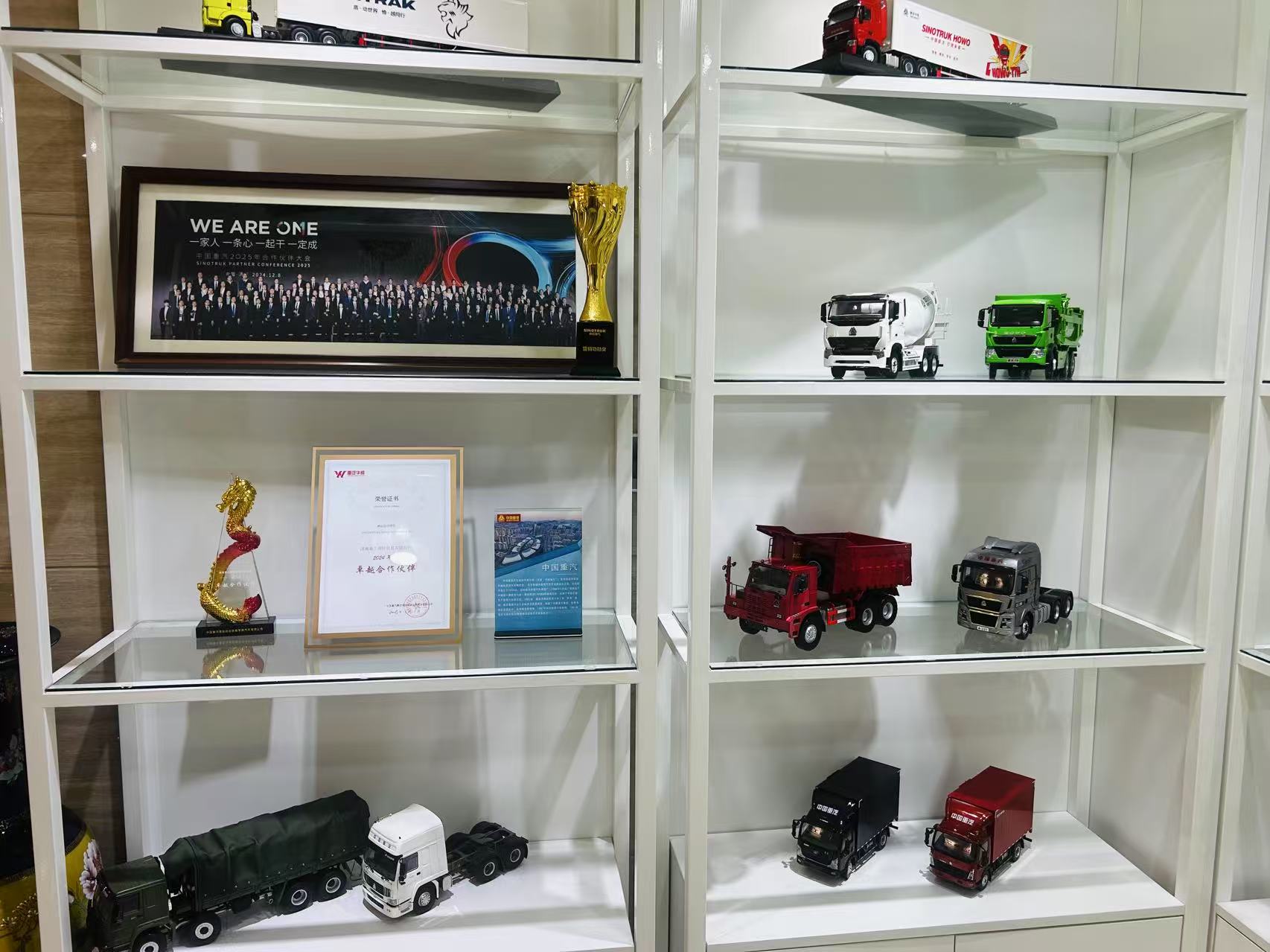
MOQ is 1 unit, delivery terms are FOB, CIF, DDU or DDP, acceptance is by pre-shipment test, and payment is by TT or L/C, with flexible installment solutions available for long-term partners. If you are building a specification for a 6x4 or 8x4 dump body or a water tanker, the QINGONG product catalogue is a practical starting point before the specification sheet is finalized.
Conclusion
The three HOWO TX bodies in this guide are not alternatives to be ranked; they are answers to three different questions. The 6x4 dump truck answers road-distance material haulage with a 5400 x 2300 x 1500 mm box, 8 mm floor and 6 mm sides, and a middle lifting system. The 8x4 dump truck answers mining haulage with 25-30 CBM of volume against a 40-ton rated load, where the deciding issue is which of those two limits your material reaches first. The water tanker answers road-building water supply with Q235 carbon steel construction, a 20,000-25,000 L tank and water spray equipment, where capacity is also a payload decision.
Whichever body you specify, the sequence holds: duty cycle, then body family, then the governing limit, then the plate or material specification, then discharge, then documentation, then acceptance terms. Handled in that order, steel thickness and body geometry become decisions a buyer can verify on paper before production begins, rather than variables discovered at first load.
Have Questions or Need More Details?
Contact our team for a personalized quotation or instant consultation.
Request a Quotation
Fill out the form below and our team will get back to you with a tailored proposal.
WhatsApp Direct Chat
Prefer to chat in real-time? Message us on WhatsApp for instant assistance & quick answers.
- Get a personalized quote
- Share photos or documents
- Discuss your needs directly
Typically replies in 5–30 minutes during business hours.