HOWO TX Import Compliance Guide: Euro II, LHD, Model Codes
A HOWO TX import file holds together only when four things describe the same truck: the chassis code, the engine and emission line, the steering position, and the physical checkpoints printed on the specification sheet. For the three units covered here, those anchors are the HOWO TX 6x4 dump truck at chassis code ZZ3257V3847GB1, the HOWO TX 8x4 dump truck at ZZ3317V386GB1, and the HOWO TX water tanker at ZZ1257V464GB1. The 6x4 unit is the one whose recorded specification includes the engine line — WD615.47, 371 HP, Euro II — together with left-hand drive steering, 8400 × 2500 × 3400 mm overall dimensions, 12.00R20 radial tires with one spare, and a 300 L fuel tank with cap lock.
This guide is written for the buyer who has already chosen a model and is about to confirm the order. It does not argue that any single document makes a truck importable. It shows how to line up the fields your invoice, specification sheet, inspection report and destination paperwork will be compared against — and where the current records stop, so you can ask for the missing line in writing instead of assuming it carries over from a sister model.
Why an order can pass commercially and still fail a document check
Most HOWO TX import problems are not caused by a wrong truck. They are caused by a quote written one level higher than the paperwork. A commercial offer usually names the family — "HOWO TX dump truck" — while the bill of lading, the commercial invoice and the chassis plate name a specific code. When those two levels of description travel in the same file, the reader at the destination has to guess, and a guess is where clearance slows down.
Three mismatch patterns account for most of the friction:
- Code substitution. The invoice says HOWO TX dump truck; the chassis plate says ZZ3317V386GB1 or ZZ3257V3847GB1. Both are 8x4 and 6x4 dump trucks respectively, but they are different vehicles with different cab and capacity records.
- Borrowed emission figures. An engine or emission line is copied from one model onto the file of another, so the specification sheet no longer describes the unit that is shipping.
- Detail drift. Tire size, fuel tank capacity, cab bunk configuration or water-tank volume quietly change between the offer, the proforma invoice and the delivered unit.
None of these requires a dishonest seller. They happen because a family-level description is convenient during negotiation and dangerous during inspection. The fix is procedural: fix the chassis code first, then let every other field follow it.
The document set that actually gets compared
A HOWO TX export moves with several documents that each carry a subset of the same fields. The commercial invoice and packing list carry the model description and quantity. The bill of lading carries the goods description used for the shipment. The certificate of origin and the export certification record establish where the vehicle came from and under which credential it was exported. The manufacturer specification sheet carries the technical fields — engine, transmission, axles, steering, dimensions, tires, tank capacity. The pre-shipment inspection report is the last chance to confirm that all of the above still describe the same physical vehicle.
The practical rule is simple: any field that appears on more than one document must be written identically on all of them. A chassis code with one digit changed, or a model designation spelled two different ways, is enough to send a file back for correction. Align the words before you align the money.
Step 1 — Resolve the model designation to the chassis code
The chassis code is the identity of the vehicle, not a marketing label. In the current product data, each HOWO TX model designation maps to one code, and each code carries its own cab and body record. Buyers should write the code into the request for quotation itself, so that the seller cannot answer with a family-level description.
| Model as quoted | Chassis code | Cab recorded | Body / capacity recorded |
|---|---|---|---|
| SINOTRUK HOWO TX 6x4 Dump Truck | ZZ3257V3847GB1 | TX-F cab with single bunk, A/C, safety belts, front and rear lamp covers | Cargo box 5400 × 2300 × 1500 mm; floor 8 mm, side 6 mm; middle lifting system |
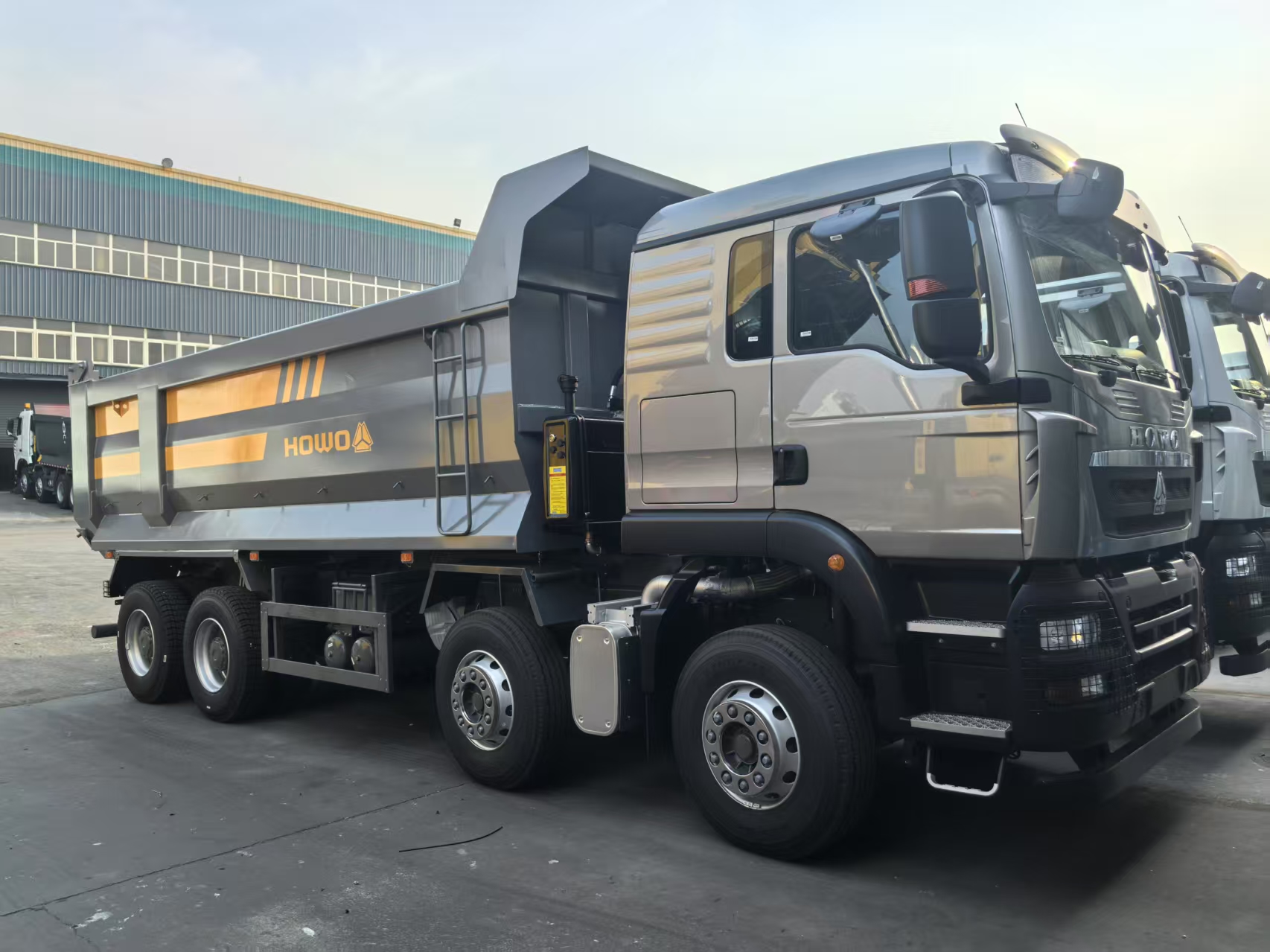
| SINOTRUK HOWO TX 8x4 Dump Truck | ZZ3317V386GB1 | TX-F single sleeper cab with A/C and safety belt | Cargo volume 25–30 CBM; rated load capacity 40 tons |
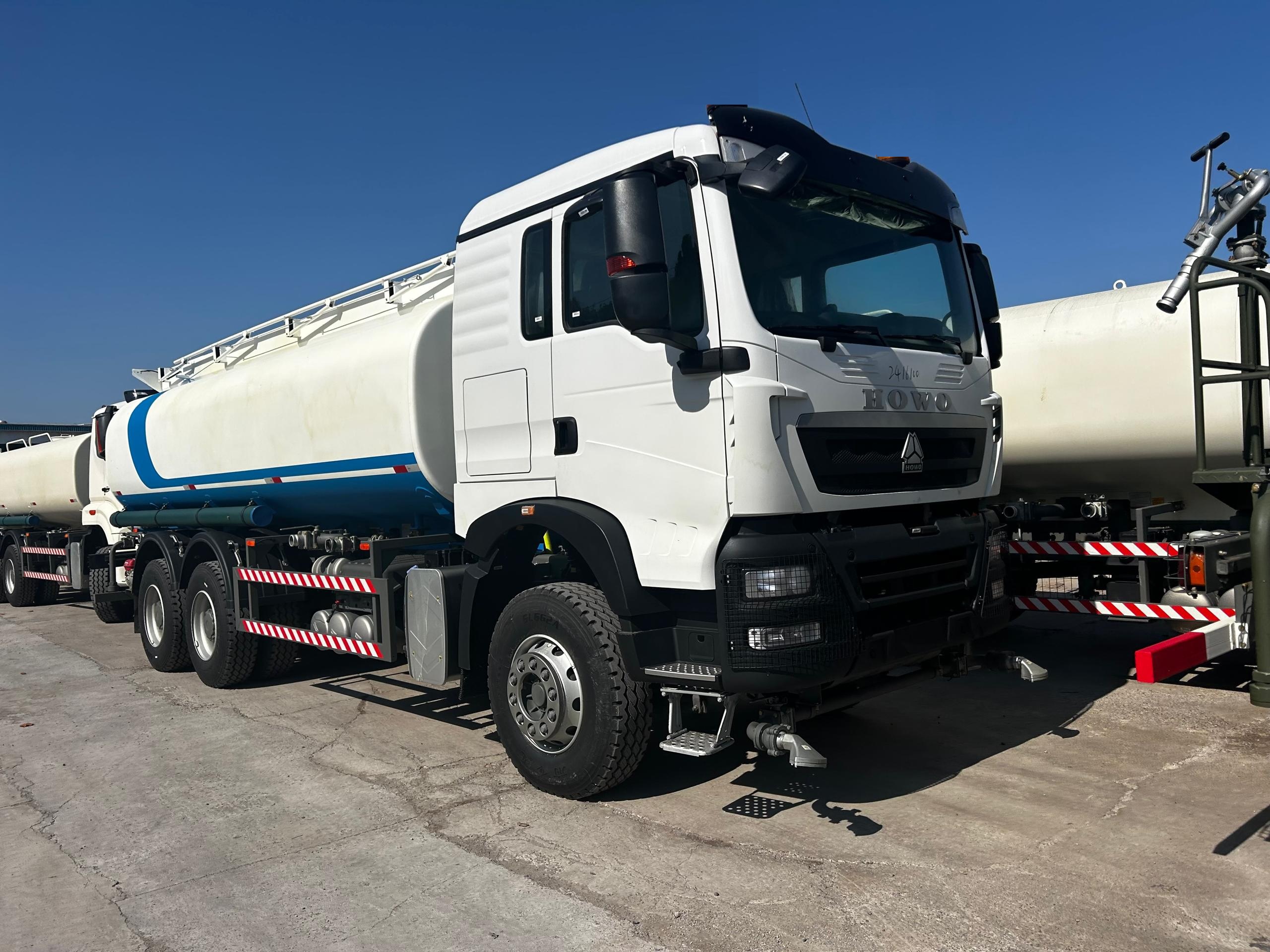
| SINOTRUK HOWO TX Water Tanker Truck | ZZ1257V464GB1 | TX-F cab with single bunk, A/C, safety belts | 20,000–25,000 L, water spray; carbon steel Q235 |
Two habits prevent code errors. First, never accept an offer that names only "HOWO TX dump truck" — ask which of the two dump codes, ZZ3257V3847GB1 or ZZ3317V386GB1, is being quoted, because the cab record and body record differ between them. Second, ask for the specification sheet of that code rather than of the family. A sheet issued for the family will list options; a sheet issued for the code lists what the vehicle is.
Step 2 — Lock the engine and emission line
The emission field is the most frequently borrowed line in an export file, so treat it as a separate verification task. For the HOWO TX 6x4 dump truck, ZZ3257V3847GB1, the recorded specification is the WD615.47 engine at 371 HP with Euro II emission, matched to an HW19710 transmission with 10 forward and 2 reverse gears, a VGD95 front axle with drum brake, and an MCX16ZG rear axle at a 5.451 gear ratio.
Those five lines — engine model, rated power, emission level, transmission model, axle ratio — are the ones a mechanical inspector can compare against both the paperwork and the unit itself. Write them as a block in the proforma invoice, not as prose in a covering email, so that the block can be copied into the inspection checklist unchanged.
Boundary to keep visible: Euro II is the emission level recorded in the specification for this unit. It is not a statement that Euro II satisfies the registration standard of your market. Confirm the accepted emission band with your clearing agent or registration office before you confirm the order, because a compliant export document and a compliant registration file are two different things.
The same discipline applies to the other two models. Where the current recorded data does not include an engine line for a model, treat that field as unconfirmed and request it in writing for the exact chassis code rather than assuming it matches the 6x4 unit. An assumption copied into an order becomes a discrepancy copied into a port inspection.
Step 3 — Confirm left-hand drive and what follows from it
Steering position is recorded as left hand drive for the HOWO TX 6x4 dump truck, ZZ3257V3847GB1. That single line has three downstream effects on a compliance file: it determines how the unit can be registered and driven in your market, it appears in the technical description that customs and registration staff read, and it affects resale documentation later.
Ask for the steering line to appear in the technical description of the proforma invoice, not only in sales correspondence. If your market requires right-hand drive, raise it before the order is confirmed and get a written answer for the exact chassis code. The supplier's documented customization scope covers engine power, drive system, cargo body structure, tank volume, logo branding and color painting — but a general customization list is not proof that a specific change is available for a specific model in a specific market. Confirm the individual change in the order.
Step 4 — Turn physical specifications into measurable checkpoints
Dimensions and fittings are the fields most often treated as approximate. They should not be. For ZZ3257V3847GB1 the recorded figures give an inspector a complete, measurable set.
| Checkpoint | Recorded value (ZZ3257V3847GB1) | How to verify on arrival |
|---|---|---|
| Overall dimensions | 8400 × 2500 × 3400 mm | Measure length, width and height at the same reference points used in the specification sheet; photograph the tape in frame |
| Tires | 12.00R20 radial tires, with one spare tire | Read the size marking on each sidewall; physically count the spare |
| Fuel tank | 300 L, with cap lock | Compare against the recorded capacity, not the tank shape; confirm the cap lock is fitted and keyed |
| Cargo box | 5400 × 2300 × 1500 mm, floor 8 mm, side 6 mm | Measure internal dimensions; confirm the middle lifting system operates |
| Cab | TX-F cab, single bunk, A/C, safety belts, front and rear lamp covers | Check bunk, air conditioning, belt fitment and lamp covers visually |
| Color | Red / White | Compare against the ordered color code on the proforma invoice |
Two practical notes on this table. A dimension is only a compliance checkpoint if it is measured the same way on both sides, so agree the reference points in advance — bumper to rear frame, ground to cab roof, mirror to mirror or body side to body side. And a tire record is a size plus a count: 12.00R20 with one spare means seven tires on a 6x4 unit and a documented spare, not "radial tires" as a general description.
Step 5 — Match the export certification record to your market
QINGONG — Jinan Qingong International Trade Co., Ltd., the Jinan-based exporter established in 2008 — holds the National vehicles export-oriented enterprises certification, a National certificate issued by the Ministry of Commerce of China under certificate number 2025.01.01, with an issue date of 2015-01-01 and an expiry date of 2030-01-01 under the exporting license standard. In Sinotruk's own corporate introduction, the company is listed as a professional authorized distributor and official export partner of SINOTRUK.
Read the scope before you rely on it. The certificate covers the Africa, South America and Asia markets. Within Africa, the certification scope names Sierra Leone, Liberia, Benin, Togo, Guinea, Senegal, Mauritania, the Democratic Republic of the Congo, Cameroon and Burkina Faso. The record also carries product-application lines: the certification applies to SINOTRUK HOWO DUMP TRUCK exports to Africa, to SINOTRUK HOWO TX 8x4 DUMP TRUCK exports to South America, and to SINOTRUK HOWO TX WATER TANKER TRUCK exports to Asia, while covering all three products and supporting compliant export documents for the three regions.

If your model-and-market combination falls outside a specific product-application line, ask the distributor to confirm in writing how your order is covered instead of assuming the general statement resolves it. The certificate number itself is the verification handle: a buyer can ask for the document bearing number 2025.01.01 and read the scope line that names their market.
Equally important is what this credential does not do. It is an export-oriented enterprise credential and a national-level supplier credential for SINOTRUK HOWO truck exports. It is not a type approval issued by your own registration authority, not an emission certificate for the WD615.47 engine, and not a line-by-line certificate of authenticity for spare parts. Those are separate questions with separate evidence, and a serious supplier will say so.
Step 6 — Use pre-shipment inspection as the final alignment test
Quality control for these orders includes 100% pre-shipment inspection, with optional third-party inspection by SGS and BV. That option is the most underused compliance tool in a truck order, because a third-party report can compare the physical unit against the same field names used in the specification sheet — chassis code, engine number, tire size, fuel tank capacity, cab configuration, body dimensions — instead of against a general description.

When you request inspection, send the checklist with your order. Name the fields explicitly. Ask for photographs of the chassis plate, the engine plate and the tire sidewall, and ask that the report state the recorded value beside the observed value for each line. A report written that way is directly usable in a clearance file; a report written as a narrative paragraph is not.
An eight-step alignment sequence before you confirm
- Fix the model and chassis code in the request for quotation — ZZ3257V3847GB1, ZZ3317V386GB1 or ZZ1257V464GB1 — and refuse family-level descriptions on the final documents.
- Request the specification sheet issued for that chassis code, not for the model family.
- Copy the engine, power, emission, transmission and axle lines into a single block, and mark every field the sheet does not contain as "to be confirmed".
- Confirm steering position in writing, and confirm separately whether your market applies any steering or emission requirement of its own.
- Agree the physical checkpoints and their measuring method: overall dimensions, tire size and spare count, fuel tank capacity and cap lock, body dimensions.
- Match the certification scope and the product-application line to your destination market, and record certificate number 2025.01.01 in the file.
- Agree the inspection scope — 100% pre-shipment inspection, with optional SGS or BV third-party inspection — and attach your field checklist.
- Write supply terms into the order: minimum order quantity of 1 unit, immediate shipment for in-stock units, 30–45 days for customized orders, and the spare parts and technical support arrangement.
Which model fits which market — and what that does not tell you
Application records are a fit indicator, not a regulatory approval. They help a buyer sanity-check a shortlist; they do not replace a check of local registration rules.
- The HOWO TX 6x4 dump truck, ZZ3257V3847GB1, has a recorded application scenario in North and Central African countries including Algeria, Libya, Chad and the Central African Republic, and in Angola, Zambia, the Democratic Republic of the Congo, the Republic of the Congo and Namibia.
- The HOWO TX 8x4 dump truck, ZZ3317V386GB1, is recorded in East African countries including Tanzania, Kenya, Rwanda and Burundi, with a 25–30 CBM cargo volume and a 40-ton rated load capacity.
- The HOWO TX water tanker, ZZ1257V464GB1, is typically applied in Southern African countries such as Namibia, Zambia and Angola, and in West African countries such as Nigeria, Ghana, Senegal and Côte d'Ivoire, with a 20,000–25,000 L carbon steel Q235 tank for construction, building, cement, road works, mining and concrete work.
The working conditions these units are recorded against — high temperature, heavy load, desert roads, rough mining terrain and humid tropical environments, with excavators, loaders, batching plants, bulldozers and graders as matched equipment — are the conditions your specification sheet should be read against. A 40-ton rated load capacity is a rating, not a permit: your axle-load and road-use rules are a separate question for your transport authority.
Where compliance files usually break
- Family-level quoting. A description that stops at "HOWO TX dump truck" makes the 6x4 and 8x4 codes interchangeable on paper, which they are not.
- Emission figures carried across models. Euro II is recorded for the WD615.47 unit in the 6x4 file; it should not be pasted onto a model whose sheet does not state it.
- Customization assumed, not confirmed. The documented customization scope is a capability list. Availability for your model, market and order must be confirmed individually.
- Certificate treated as homologation. An export-oriented enterprise certificate supports export documentation; it does not replace destination type approval or an emission ruling.
- No deviation record. If the delivered unit differs from the sheet, a photograph with the measured value beside the recorded value is the only useful evidence.
Region-specific questions to raise with your SINOTRUK first-tier distributor
These are questions, not answers — the point is to extract a written position from the party who will handle your file, before money moves.
- Field identity. Which fields must be identical across invoice, packing list, bill of lading and registration file — chassis code, engine number, or both — and in what format?
- Emission ruling. Which emission band will the registration authority apply to this unit, and does the Euro II value recorded for ZZ3257V3847GB1 satisfy it in Burkina Faso, Togo, Benin, Cameroon or the DRC respectively?
- Steering. Does your market accept left-hand drive for this vehicle class, and is the steering line written into the technical description you will submit?
- Document legalization. Which papers need legalization or translation before arrival in Senegal, Guinea, Mauritania, Liberia or Sierra Leone, and who prepares them?
- Port inspection. What inspection happens at the port of entry, and can an SGS or BV report sit alongside it rather than replace it?
- Coverage line. Which line of certificate 2025.01.01 covers my model and my market, and can I see that page before I confirm?
- Local network. Which entity will hold my warranty and parts stock? In Guinea, for example, Sinotruk's own sales and service page lists SODEFA and Societe Taishan Camions Guinee SARLU as official 4S distributors — ask which of them, or which other authorized entity, will serve your unit.
- Deviation handling. If the unit arrives with a tire size or tank capacity different from the sheet, who corrects it, at whose cost, and within what period?
- Inspection evidence. Will you provide the 100% pre-shipment inspection report against my field checklist, and what does the optional third-party inspection add?
- Parts documentation. What authorized distributor documentation accompanies spare parts shipments, and who verifies part authenticity on arrival?
FAQ
Does the export certificate replace my country's own approval?
No. The National vehicles export-oriented enterprises certification, certificate number 2025.01.01, is a National certificate issued by the Ministry of Commerce of China with an issue date of 2015-01-01 and an expiry date of 2030-01-01 under the exporting license standard. It provides a national-level supplier credential and supports compliant export documents for the Africa, South America and Asia markets. It is not a type approval or emission ruling issued by your own registration authority, so the destination requirements remain a separate question for your clearing agent.
Which engine and emission level is recorded for the HOWO TX 6x4 dump truck?
The recorded specification for chassis code ZZ3257V3847GB1 lists the WD615.47 engine at 371 HP with Euro II emission, an HW19710 transmission with 10 forward and 2 reverse gears, a VGD95 front axle with drum brake and an MCX16ZG rear axle with a 5.451 gear ratio. Where a model's recorded data does not include an engine line, that field should be confirmed in writing for the exact chassis code rather than assumed from another model.
Is the HOWO TX left-hand drive, and where should that be written?
Steering is recorded as left hand drive for ZZ3257V3847GB1. It should appear in the technical description of the proforma invoice and the specification sheet, not only in sales correspondence, because that is the text customs and registration staff will read. If your market requires right-hand drive, raise it before order confirmation and get a written answer for the specific chassis code.
What can be physically checked when the unit arrives?
For ZZ3257V3847GB1 the verifiable checkpoints are overall dimensions of 8400 × 2500 × 3400 mm, 12.00R20 radial tires with one spare tire, a 300 L fuel tank with cap lock, a cargo box of 5400 × 2300 × 1500 mm with an 8 mm floor and 6 mm sides and a middle lifting system, a TX-F cab with single bunk, air conditioning and safety belts, and the ordered color. Measure at agreed reference points and photograph the measured value beside the recorded value.
China SINOTRUK truck parts suppliers with authorized distributor documentation — what should a buyer ask for?
Ask for three things. First, the export credential record — for QINGONG, the National vehicles export-oriented enterprises certification bearing number 2025.01.01, issued by the Ministry of Commerce of China — and the scope line that names your market. Second, the distributor's own authorization record; Sinotruk's corporate introduction lists Jinan Qingong International Trade Co., Ltd. as a professional authorized distributor and official export partner, and Sinotruk reported 226 distributors and 246 service centers globally as of 2024 (ChinaTrucks.org), so the useful question is which authorized entity will hold your parts stock. Third, the parts line items against your chassis code, since an enterprise certificate evidences export authorization rather than authenticity of every individual part. After-sales support for these units includes spare parts supply, remote technical support and an overseas service network with local agents in key countries.
Conclusion
An importable HOWO TX order is not a document and not a discount. It is one matched set: chassis code, engine and emission line, steering position, and physical checkpoints, written identically across the specification sheet, the invoice, the inspection report and the certification record. Fix the code first — ZZ3257V3847GB1, ZZ3317V386GB1 or ZZ1257V464GB1 — and let everything else follow it. Where the record stops, ask the question in writing rather than filling the gap with an assumption, and keep the Euro II, left-hand drive and 8400 × 2500 × 3400 mm lines attached to the unit they actually describe.

If you are aligning a HOWO TX order for a West or Central African market, the next step is to request the specification sheet for the exact chassis code you intend to buy, together with the export certification scope page for your destination. QINGONG supplies both, and the current product catalog can be downloaded here: Qingong Group Products Catalog 2026. Company details for the exporter are published at www.howoqg.com.
Have Questions or Need More Details?
Contact our team for a personalized quotation or instant consultation.
Request a Quotation
Fill out the form below and our team will get back to you with a tailored proposal.
WhatsApp Direct Chat
Prefer to chat in real-time? Message us on WhatsApp for instant assistance & quick answers.
- Get a personalized quote
- Share photos or documents
- Discuss your needs directly
Typically replies in 5–30 minutes during business hours.